Freedom Fighters by Anne Williams & Vivan Head
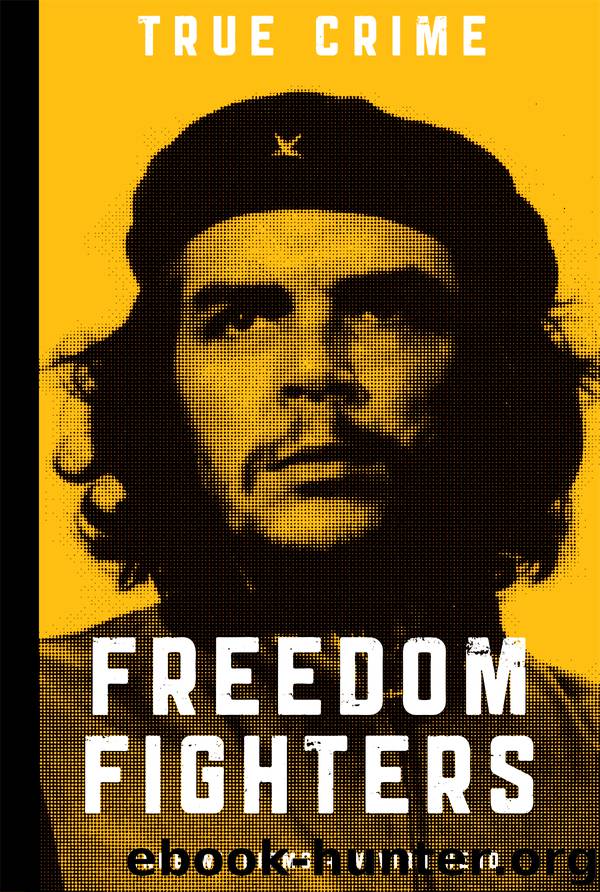
Author:Anne Williams & Vivan Head
Language: eng
Format: epub
Publisher: Canary Press eBooks
Published: 2013-09-01T16:00:00+00:00
Oliver Cromwell
Oliver Cromwell rose from humble beginnings to become one of Britain’s greatest political and military leaders. He can be considered as a freedom fighter and a soldier of liberty because his actions were purely out of an intense passion for his country. When Britain was on the verge of anarchy, Cromwell emerged to give his country a lasting legacy – parliamentary democracy. At the height of his career Cromwell was offered the crown of England, which he politely turned down.
Cromwell was born on April 25, 1599, in Huntingdon to a relatively poor family. He was baptized at St John’s Church in Huntingdon when he was only four days old, and as a young boy he studied at a free school which was attached to the Church. Cromwell later went on to spend a year at Sidney Sussex College, Cambridge, where he became popular because of his abilities in sports rather than his academic skills. His spell at Cambridge University was cut short when his father died in 1617. He was needed back home to manage the family’s estate and help his mother look after his seven umarried sisters.
Cromwell made a living by farming and also collecting rents from his native Huntingdon. In August 1620, he married Elizabeth Bourchier, who was the daughter of a London merchant, Sir James Bourchier. His income was modest and he needed to support an ever-growing family. The marriage was a long and happy one and produced nine children.
Cromwell Enters Politics
Cromwell was elected as MP for Huntingdon in 1628, and this was his first introduction to the opposition to the current king, Charles I. During the late 1620s, Cromwell suffered a period of mental illness, which seemed to have had the effect of awakening his religious beliefs. His religious fervour made him suspect, along with fellow Puritan reformers and dissenters, that Charles I was sympathetic towards the Catholic church, which had a profound influence on Cromwell’s future political career.
In 1631, Cromwell was once again down on his luck when his fortunes started to decline. He was forced to sell most of his estate in Huntington, and he leased a farmhouse in St Ives, where he worked as a farmer for the next five years. In 1636, Cromwell’s uncle, Sir Thomas Steward died, leaving no heir to his fortune. Cromwell came into what amounted to quite a significant inheritance, which turned his fortunes round. He was now the owner of a house next to St Mary’s Church in Ely and also inherited the position of local tax collector for the two parishes of St Mary’s and Holy Trinity. Cromwell’s new, improved social status was just the rung he needed in his climb up the political ladder.
His first major political role was in 1640, when he was elected as a freeman of the borough of Cambridge and also MP for Cambridge in the two parliaments. Cromwell came into prominence as a speaker during the first week of the Long Parliament. He made a long and passionate speech about the wrongful imprisonment of a man named John Lilburne.
Download
This site does not store any files on its server. We only index and link to content provided by other sites. Please contact the content providers to delete copyright contents if any and email us, we'll remove relevant links or contents immediately.
Mindhunter: Inside the FBI's Elite Serial Crime Unit by John E. Douglas & Mark Olshaker(9347)
Wiseguy by Nicholas Pileggi(5795)
Room 212 by Kate Stewart(5130)
Hitman by Howie Carr(5101)
Secrecy World by Jake Bernstein(4756)
Killers of the Flower Moon: The Osage Murders and the Birth of the FBI by David Grann(4451)
Papillon (English) by Henri Charrière(4278)
Breaking Free by Rachel Jeffs(4222)
Killers of the Flower Moon by David Grann(4062)
Say Nothing by Patrick Radden Keefe(3991)
American Kingpin by Nick Bilton(3893)
The Secret Barrister by The Secret Barrister(3715)
Molly's Game: From Hollywood's Elite to Wall Street's Billionaire Boys Club, My High-Stakes Adventure in the World of Underground Poker by Molly Bloom(3541)
Mysteries by Colin Wilson(3459)
In Cold Blood by Truman Capote(3390)
Signature in the Cell: DNA and the Evidence for Intelligent Design by Stephen C. Meyer(3141)
I'll Be Gone in the Dark by Michelle McNamara(3086)
Rogue Trader by Leeson Nick(3048)
Bunk by Kevin Young(3005)
